Mad Scenes in Opera

Updated: May 1
They are highlights of opera and have been so from Baroque to the present. Fascination with opera's mad scenes is widely documented on the internet, with many lists of the 'top' ones . Wikipedia lists them here. Not surprisingly, there's lots of overlap, but invariably the lists centre around the early nineteenth century, and always they include the bloodstained scene in Donizetti's Lucia di Lammermoor, "Il dolce suono", which Wiki labels "the locus classicus" - the classic example.
"The Top Five Mad Scenes In Opera' are provided by OperaWire here. And 'The Top 10' by Operavore here. In "Opera Mad Scenes: 6 Glorious, Over the Top Moments" WFMT lists their favourites, noting "One of opera’s most delicious signatures is the mad scene. Whether marking a shocking realization, a wave of guilt, or a rush of mania, mad scenes are often the title’s apex, as drama and music come to a head as one."
Classical madness
A quick revision of the classical offerings we saw last year. Remember Mozart's Idomeneo? One of the hardest arias of his works is Electra's mad scene (she's lost Idamante and her dreams of becoming his queen.) Here's Carol Vaness. And for Sutherland fans, a recording of Dame Joan from 1979.)

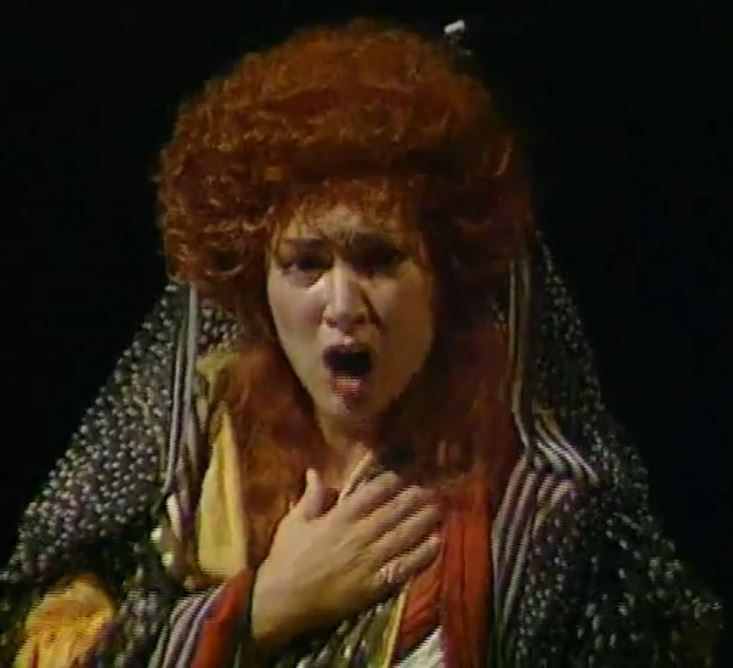
Mozart went on to produce in Magic Flute's Queen of the Night a coloratura character whose madness increases during the opera, culminating in her raging command to her daughter that she must murder Sarastro. Here's Diana Damrau.

Madness is Romantic
Unsurprisingly, mad scenes proliferated early nineteenth century in the Romantic period we move to now. What's more romantic than a woman wildly freed from conventional rules of behaviour, betraying her intimate innermost emotion, telling her history that has brought her to this? Romanticism - in literature, art and architecture as well as music - was a wholesale rejection of rationalism and restraint (and the industrial revolution). Passion and freedom from emotional constraint - especially for women - was the antithesis of rationalism. The sane (and masculine-dominated) social world can be contrasted by opera directors with the woman's often joyful freedom from it.
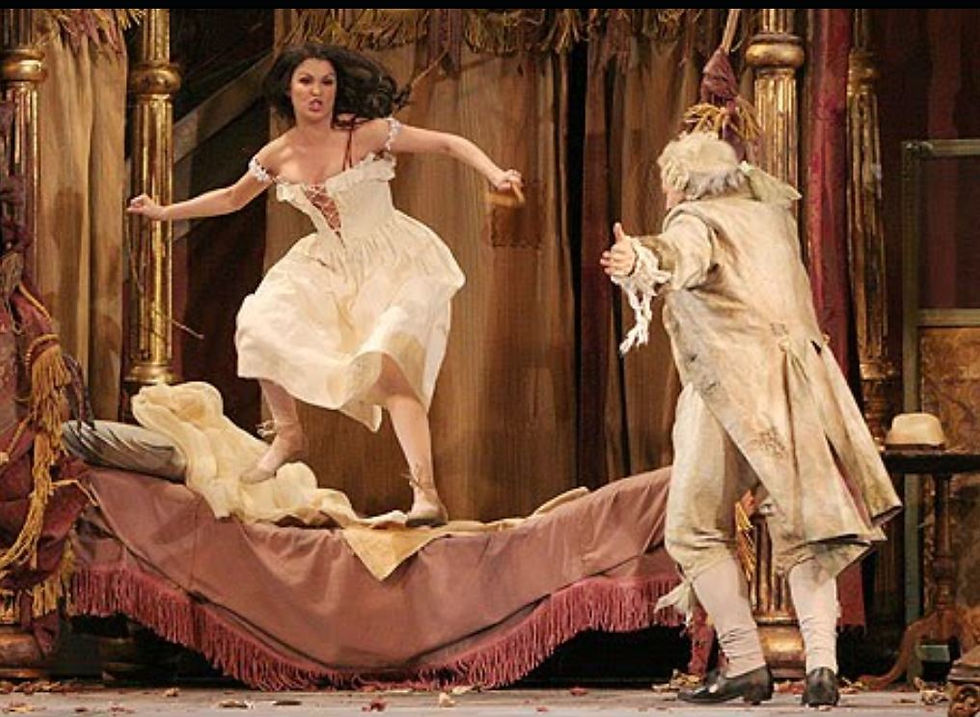
Here's the Met's 2009 production of Lucia with Anna Netrebko.

In many of these scenes, the "mad" music and the drama of the soliloquy contrasts with previous scenes. Lucia's bloodstained arrival after murder of her bridegroom is followed by lyrical music as her little voice tells a dream: "Il dolce suono" (sweet sound...)
As the romantic period took over, and coloratura ruled, mad scenes became the notorious challenge for a diva, especially the Italian divae. But they're not all Italian and not all for women - and in fact not often about madness rather than fear, fury or explosive emotion. For more thoughts on the labelling of such segments, check out Graham Abbot's script for his radio session on mad scenes.
What of Male Madness?
We've already met German versions. Beethoven composed the desperate dreaming of the lone and tortured Florestan, husband of Fidelio. (Here's Kauffmann).
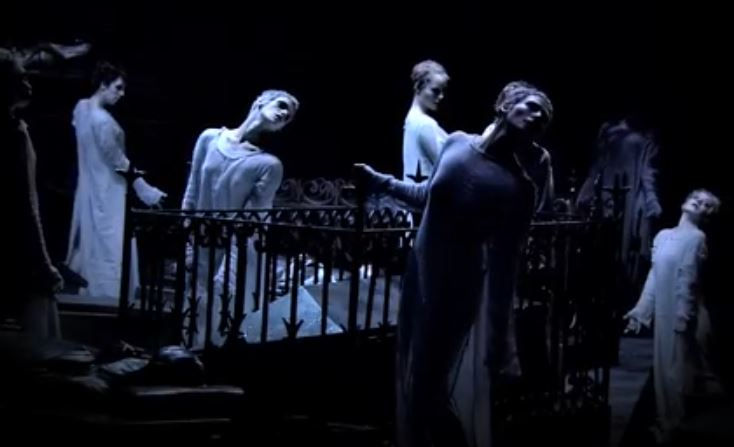
And then we had two versions of madness of meeting the devil (Weber's huntsman and Meyerbeer's Robert ) - both splendidly composed and so little known today that there are few YouTube recordings of them. Most clips from Robert le Diable feature his visit to a haunted ruined abbey once notorious for the depravity of the inmates - the dancing nuns celebrated insanity.

Later, Meyerbeer's Le Prophet (1849) provided mad scenes for Jean, the would-be prophet's dream, (left) and for his mother, Fides - a mezzo role (below) losing her mind in mourning for the supposed death of her child.

Ten years later, Meyerbeer created a soprano role in Dinorah, his only comedy, and wrote her a brilliant mad scene: "Ombre légère" (Shadow Song). It's is a bel canto showpiece, famous virtuoso coloratura aria which Dinorah sings to and dances with her own shadow. Here's the voice of Maria Callas.
Later still of course Wagner gave to Hans Sachs in Die Meistersinger von Nürnberg the monologue about madness. (Gerald Finlay here.)
Italian madness
But in Italy, the early romantic period brought usually tragic roles for women and coloratura heights for their monologues. The Italian line-up in this period is formidable. The first half of the 19th century in Italian opera was dominated by the bel canto style, in turn dominated by Gioachino Rossini, and then by Gaetano Donizetti, and Vincenzo Bellini. Britannica offers a splendid summary of this trio. They all did wonderful mad scenes for women and the “mad scene” became a staple of 19th-century operas, representing pain and mental struggle through musical means.
Rossini is known now mainly for his comedies - there are splendid patter songs but no mad scene in Barber of Seville. But he wrote many more (mainly tragic) historical pieces, and those are where mad scenes belong. Intriguingly, in Semiradime, (1823) he provided the first (and last?) mad scene for a bass. In this amazingly complex plot, Prince Azur has a lot to go mad about.
He'd tried a mad scene earlier, (1819) in the equally complex Ermione. ‘Essa corre al trionfo!’), an enormous, multi-section aria (vivace – andantino – allegro – andante – moderato – allegro), punctuated by wedding procession and chorus.

After Rossini, for mad scenes, Donizetti ruled then and now. His most often cited scene is Lucia's, partly because it's constructed as a three part monologue. Joan Sutherland (left) arguably re-launched the opera here and in the UK.
Want more? There's a 16min discussion of why this is "the ultimate operatic mad scene" here. And a thinkpiece about this famous scene is here.
Here, Lisette Oropesa sings the whole monologue, (with the glass harmonica accompaniment specified by Donizetti.
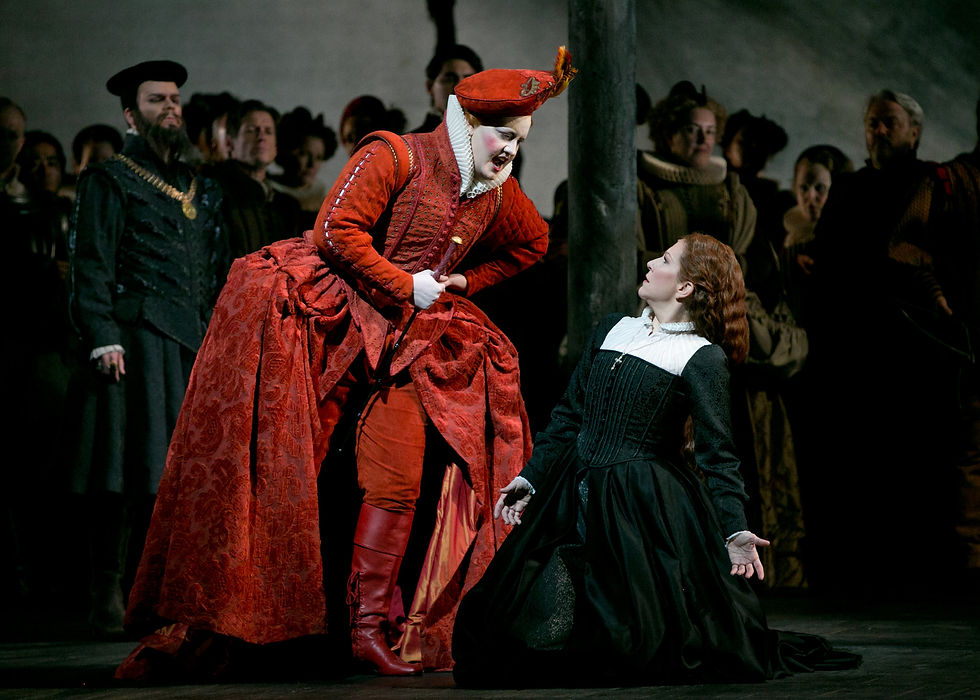
But what else did Donizetti contribute to the mad scenes lists? Tops is Ann Boleyn in prison awaiting execution. In her cell, a chorus of ladies comments on her grief. Anna enters and asks them, “Are you weeping?”, "Piangete voi?" She imagines that it is her wedding day to the king. Then she imagines that she sees Percy and asks him to take her back to her childhood home. (“Al dolce guidami castel natio . . .”)
(But unlike most "mad" heroines, she regains her sanity for a final cabaletta for soprano, her defiant denunciation of the wicked king - a proud and very sane woman here. )

And then there was Bellini. His epic and final opera I Puritani (1836) provided many opportunities to put music to drama. It's another story of forbidden love, this time between a Puritan and a Royalist during the English Civil War - with violence, madness, and political intrigue. ( Lots more here - and later this term.) Elvira (a Puritan) has been apparently deserted by her loved Royalist: Qui la voce ... Vien, diletto / "Here his sweet voice called me...and then vanished. Here he swore to be true, here he swore it, and then, cruel man, he fled!".
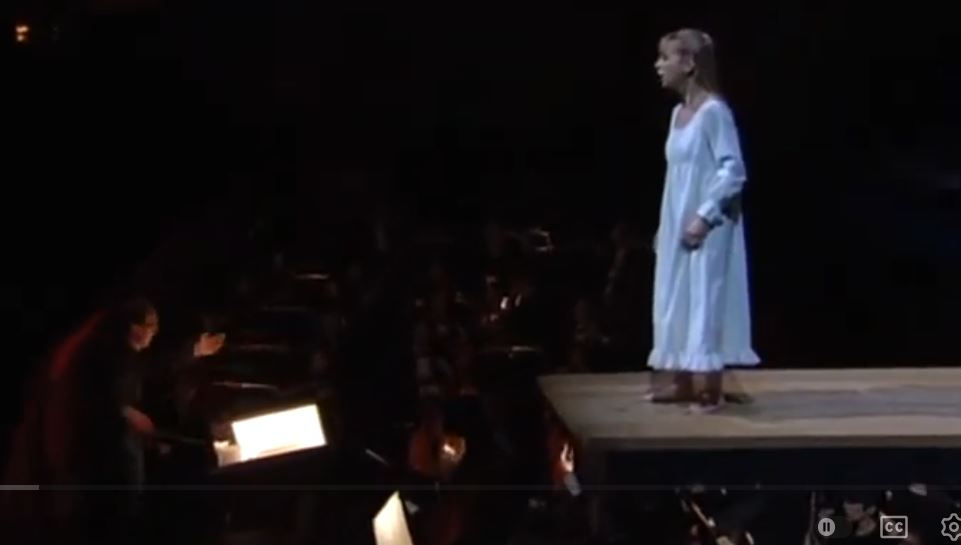
Bellini's earlier La Sonnambula contributed a different mad scene: Armina has been (yes) deserted by her lover who suspects her of infidelity though in fact she was just sleepwalking and went into the wrong bedroom. In the famous scene she is not mad but, well, sleepwalking: "Oh! se una volta sola...Oh! ... if only once I could see it again.."
And after the Romantics?

Just check out the list in Wikipedia! It's interesting to see the mad scene shift after mid nineteenth century, (as the science of psychology develops?) For starters, more men go mad.
Britten remade assumptions about madness in opera with the final scene of Peter Grimes (1945).
Left is Jon Vickers at Covent Garden.

The whole opera leads to the final scene, so you need to watch it whole to understand the 'mad scene' in context.
This 1969 BBC full recording of Britten's opera has his partner, Peter Pears, as Grimes.
A footnote to comedy
Note, those mad scenes are never, ever funny! There's a lot of lovely very funny coloratura from the Italians in that period (especially from Rossini and Donizetti who turned easily to opera buffa.) But that's different.
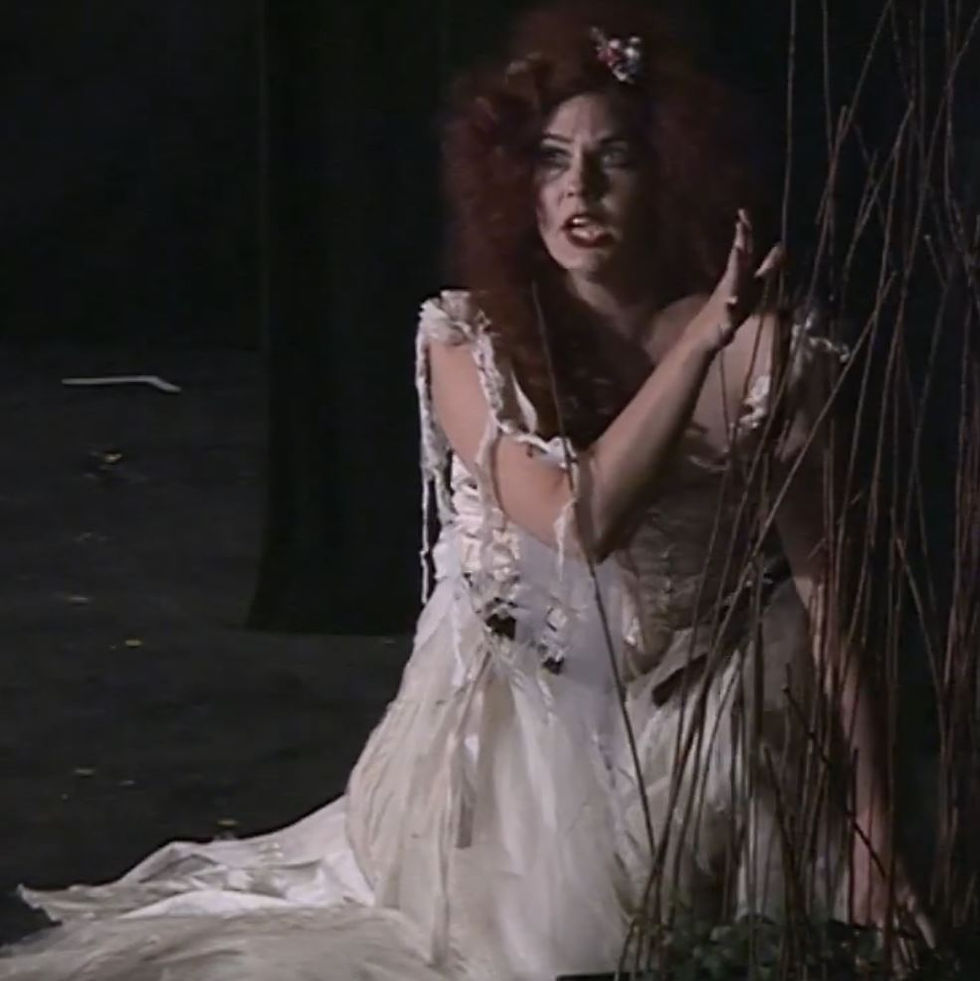
It was left to Gilbert and Sullivan to parody the mad scene in operetta, complete with cheeky rhymes. "Cheerily carols the lark over the plot/ Merrily whistles the clerk, scratching a blot./ but the lark and the clerk, I remark, comfort me not..."
Their (pretty mad) operetta Ruddigore features Mad Margaret, whose insanity is due, as traditionally in mad scenes, to loss of her man. Here's mezzo Mae Heydorn at the Buxton Opera House in 2018.
Comments