A woman who wins

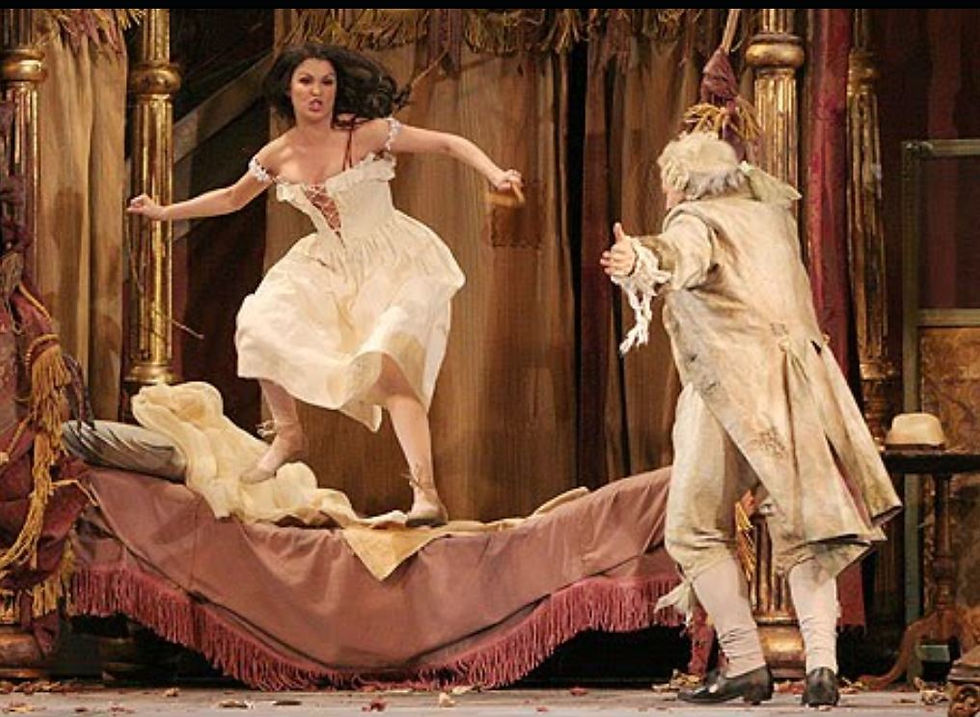
Don Pasquale was Donizetti's last and greatest comedy, premiered in 1843 in Paris with great success. The 64th of his known 66 operas, it's "generally regarded as being the high point of the 19th century opera buffa tradition as well as marking its ending." Wiki tells its history here.
The plot?
Well, it's all about a plot, actually. It's a very sexist and ageist account of a plot to trick an elderly man who is planning to marry a beautiful young woman with other intentions (sounds familiar?).
The Don is a completely ridiculous figure, in this production also portrayed as losing it and far from hygienic. The woman, Norina, is feisty and clever and assisted in her deception and destruction of the Don's dignity by her brother (who is the Don's scheming doctor) and her lover, Ernesto (who is the Don's nephew, potentially disinherited because he refused an arranged marriage and was determined to marry - yes, the feisty, clever woman now to be the Don's bride). Get it?

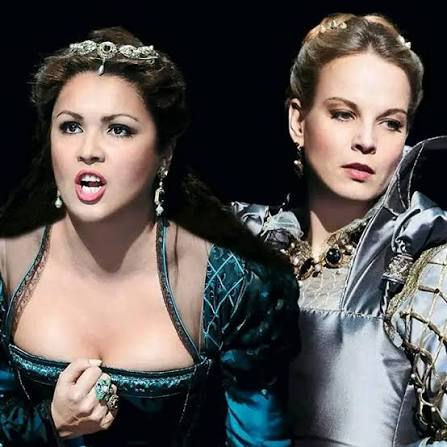
Here's the story in pictures from our production...
The action moves fast from the gleeful plotting of Norina and her brother, Dr. Malatesta, to his introducing her as his limpid and obedient sister to Don Pasquale. Who is of course smitten by this perfect potential bride.
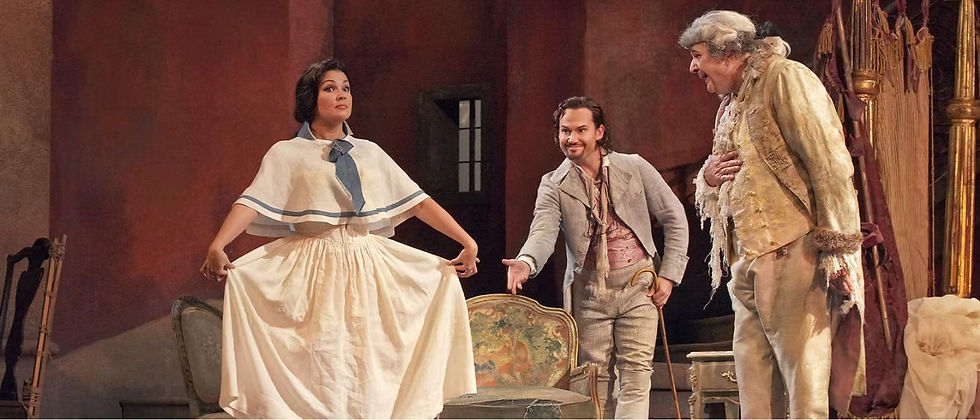
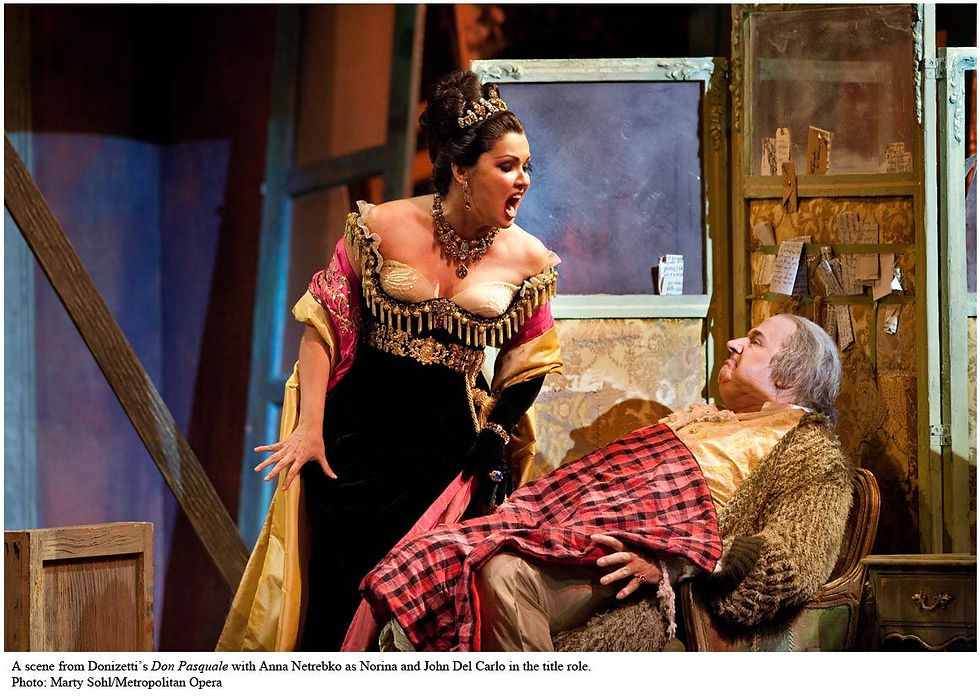
After a faked marriage (sounds familiar?) Norina reverts to type, becoming a harridan, a wild spendthrift and a bully worthy of any patter song.
Reasonably, Don Pasquale seeks her removal from his messy house.

In the garden at night, Norina meets up with Ernesto, the (largely absent) tenor in all this, to sing the lovely duet Tornami a dir che m'ami ". "Tell me once more that you love me".

And in 2010 she sings it a little more demurely with Matthew Polenzani!
Predictably, then, the plotters provide the Don with a complicated way to escape from the marriage. And on learning Norina is the desired bride of his disinherited nephew, he accepts their marriage as a way out and obligingly re-inherits Ernesto.
If you want a more orderly account of the opera, the synopsis is here.
Our production
Starring Anna Netrebko, Matthew Polenzani, Mariusz Kwiecień, and John Del Carlo, conducted by James Levine. From November 13, 2010.
The pictures above show Netrebko's enjoyment of this role. The critics acclaimed her. The blokes are brilliant too. The Met's favourite tenor/baritone pair, Matthew Polenzani, tenor and Mariusz Kwiecień, baritone, plot a very ageist defeat of the Don, played here splendidly by John Del Carlo. But as this reviewer puts it,
'it is very much Netrebko’s show'.
So why do we forgive the plot?
As I commented above, it's a very sexist and ageist story, unpleasantly stereotyping the elderly Don and unjustifiably celebrating his defeat by a trio of unsavoury gold diggers. So why is it so successful across the centuries, and still one of the most performed of Donizetti's dozens of operas?
It's surely not because we forgive the nastiness when, in the final scene, the Don, defeated and humiliated, agrees marriage isn't for old men and he was foolish to be fooled. We didn't know that when we delighted in the earlier acts. Why?
Well, there is the music, glorious music.
And there is the seemingly irrepressible joy of the songs celebrating the fast paced action with fast paced fun. From a composer by then fatally ill.
It's all there in the famous duet of the scheming Malatesta with the foolishly deceived Don, as he is sold a plan to expose Norina and her lover so he can divorce her. "Cheti cheti immantinente" (quietly, quickly..)
Here from a 1979 film are the Don Pasquale of Sir Geraint Evans, and as Dr Malatesta: Russell Smyth. Subtitles help you get the plot behind the patter.
A cynical reviewer concludes, "This Don Pasquale is really a good production, I highly recommend it. Not only because of a first grade cast who truly enjoy their art, but the simple, yet stupendous music takes one away from one’s daily struggles, questions and doubts. After all, life is fair and everything is fine the way they are. Art is here to soak us into another dimension, a deep level where, even one note of music, makes a miracle. And that is happiness."
And there is the idiocy of the plot. It's a fantasy of opera-worthy caricatures from way back. "In the tradition of opera buffa, the opera makes reference to the stock characters of the commedia dell'arte. Pasquale is recognizable as the blustery Pantalone, Ernesto as the lovesick Pierrot, Malatesta as the scheming Scapino, and Norina as a wily Columbina. The false Notary echoes a long line of false officials as operatic devices." More here from Wiki.
I found a reviewer comparing previous dislike of the plot and later love of this performance - and explaining the conversion by rethinking the characters as cartoons. But these are not just any cartoons, rather characters built into opera till the early Romantic period. In opera since, are they gone?
Classical Music concludes: "For all its opera buffa fizz a deep vein of cruelty runs through Donizetti’s final comedy, and more than a hint of melancholy. A production of Don Pasquale that gets it wrong when Norina slaps her husband, or that turns Ernesto into a lovesick chump fails. On both counts Otto Schenk’s 2006 production for the Met passes muster." Agree?
Lyn, 2/9/26

Comments