Enter the Tudor Queens

Updated: Aug 7
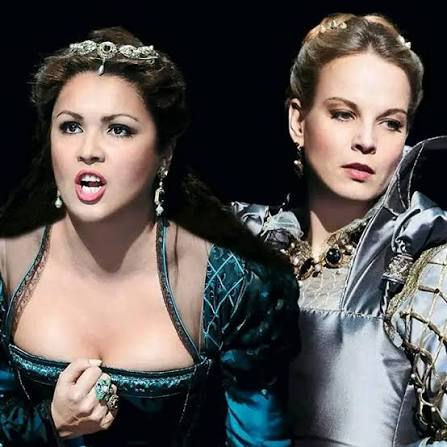
Donizetti created a trilogy about the English Tudor royals, in the 1830s - three operas each starring not one but two strong women, sung by a soprano and a mezzo. Anna Bolena (1830) was Donizetti's first international triumph. (He'd already composed over 30 operas.) Two years later he turned to comedy (Elixir of love), then he returned to the Tudor tragedies with (1934) Maria Stuarda and Roberto Devereux (1837).

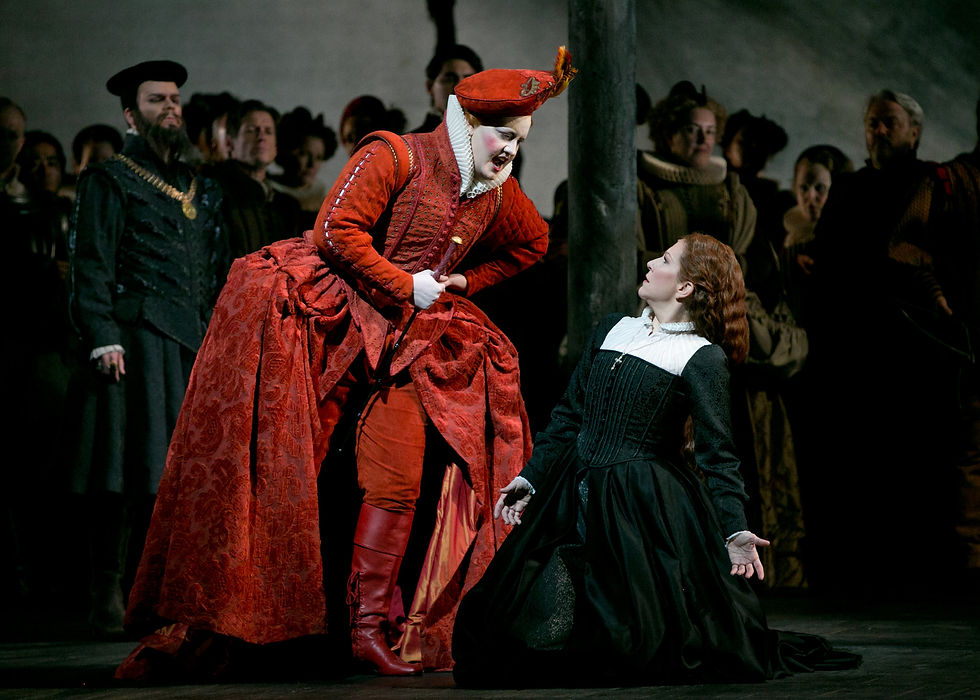
The opera dropped from popularity partly because Donizetti soared to his greatest heights in composing the music that tells this drama - especially, in each of the operas, of the two lead women. So its casting is demanding. And verismo was on the rise, replacing tragic opera (tragedia lirica). More than a century after their premiers, the Donizetti Queens were revived. Callas sang Anna at La Scala in 1957, and European productions followed. In 2011, Anna Netrebko and Elina Garanca triumphed in Vienna in the leads (above). And then at the Met in NY, Netrebko and Ekaterina Gubanova starred in David McVicar's production (right) More here.
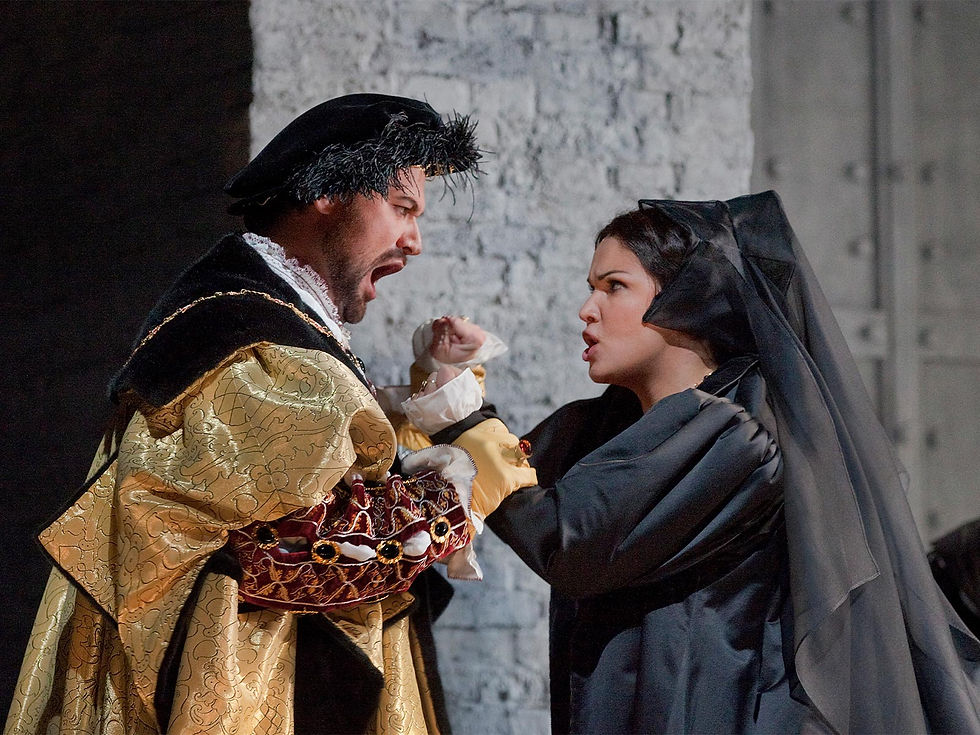
The Met Opera's staging of the trilogy is legendary, for its brilliant casting of those central roles, for David McVicar's dark presentation of each of the dramas and of course, this being the Met, for the extravagant court settings and costuming. More in a Met essay here.
(Too dark? There's a sharp criticism here of the lack of 'glamour' in the production.)
Anna Bolena (the Met production we'll watch) appeared in 2011, Maria Stuarda in 2013, Roberto Devereux in 2016. And the Met's 2015-16 season had all three, with Sondra Radvanovsky the first singer in Metropolitan Opera history to tackle all three royal roles in a season.
We are streaming this term from the Met. If you were a beneficiary of the Met's generous free live streaming during Covid, you may have seen all three in 2020 and 2021. Here's our blog in April 2020, for the amazing week the trilogy of original productions screened.
The plot

Felice Romani wrote the Italian libretto. It's loosely faithful to history. (Here's the Wiki account of the times and the short life of Anne.) But it's only one version of the history. His disposal of Anne was central to Henry's declaring the English church's independence from the Catholic Church. Unsurprising that her history has been debated since. Click here for a fascinating summary of the changing interpretations of Anne's life and political influence. Trivia item: accused of witchcraft, she made it to the staircase of Hogwarts!
The two lead women of Donizetti's opera are certainly historically founded. They are the second wife of Henry VIII, Queen Anne Boleyn and her Lady in Waiting and friend, also her rival for her husband, Jane Seymour - who (yes) became his third wife. More here in this review.
For a flavour, listen to “Coppia inicua” Anna's most famous aria, accusing Henry and Jane. Here's Sutherland
And here's Maria Callas from the 1952 La Scala production with the "mad scene" after the queen is imprisoned. (The video has English translation of the lyrics.)
Our production
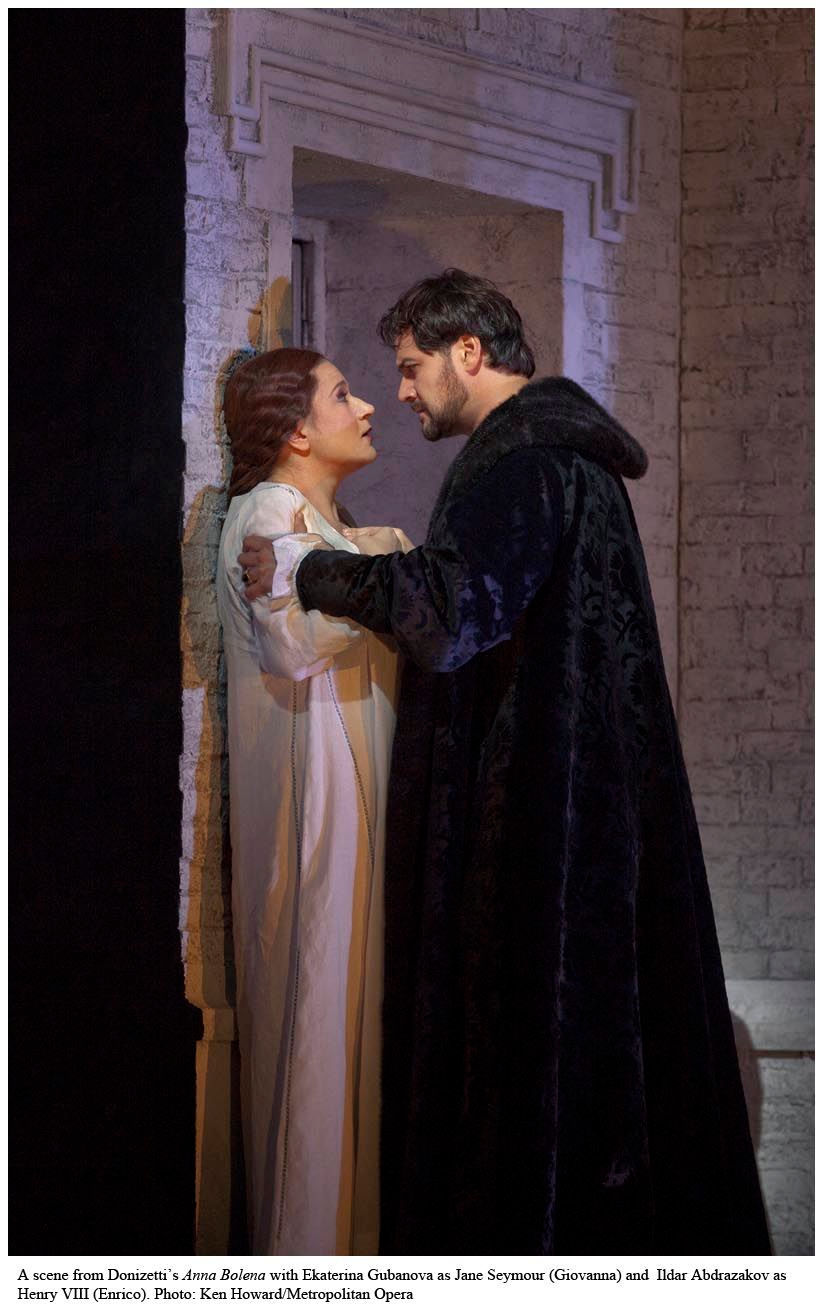
We're streaming from New York the Met Opera's 2011 premiere production of Anna Bolena, director David McVicar. The cast is brilliant, the Tudor royals ironically played by three Russian singers at the height of their powers. Anna Netrebko is Queen Anne Boleyn, the second wife of King Henry VIII (Ildar Abdrazakov) who has removed his first wife and now pursues another woman, soon to be his third —Jane Seymour ( Ekaterina Guberova).
To get a feel for the the stellar cast, as well as Donizetti's music for tragedy, here's an extract from Act 11 of the Vienna production in 2011 - Anna is accused by Henry, with Jane Seymour torn between loyalty and love.
"Ah! segnata è la mia sorte" Anna sings in the cabaletta - "Ah! My fate is sealed."
And so it was.
Lyn 5/8/26

Comments