And then, Donizetti

Updated: Jul 30
Rossini, Donizetti, Bellini - the triumph of Italian bel canto. Their lives overlapped as did their styles, each easily moving between sweet comedy and tragic historical drama. Rossini (1792 - 1868) outlived the younger Donizetti (1797 – 1848). Their copatriot and rival, Vincenzo Bellini died very young (1801–1835) having produced only (!) 10 operas. But Rossini wrote no more operas after William Tell, (1829), his 39th in 19 years. By then, Donizetti had produced 22, all Rossini-style and now largely forgotten. (Like Rossini, he was incredibly prolific.)

So by 1830, there was only Donizetti. His Anna Bolena premiered at La Scala in 1830, and from that year, Donizetti ruled the world of opera. Followed The Elixir of Love (1832), Lucia di Lammermoor and Maria Stuarda in 1835. “Monsieur Donizetti seems to treat us like a conquered country,” wrote Hector Berlioz in his review of the premiere of La Fille du régiment at the Opéra-Comique in 1840. “It is a veritable invasion.” More here. And that was before Don Pasquale (1843).
In the next 25 years, Donizetti produced over 70 operas, "at one point having works running simultaneously in four Parisian opera houses." More here. Rapidly, he developed his own style,drawing on the innovations of the others. Comedy or tragedy, the operas had in common:
· The great arias with two parts, the cavatina and then the cabaletta.
· Key, massive roles for especially tenor and coloratura soprano
· Amazing group pieces – sextets, quintets…
· And the focus on characters and interaction – duets, confrontations, conversations.
Check out the summary on the ENO site here:
"Gaetano Donizetti’s musical style is defined by his mastery of melody, emotional expressivity, and his strong connection to the bel canto tradition. ... Donizetti blended Rossini’s lively rhythms and ensemble structures with Bellini’s long, flowing melodic lines and dramatic intensity. He was also influenced by the Neapolitan school, which emphasized vocal purity and clear forms. Donizetti’s flexible use of operatic structures, balancing traditional forms with dramatic needs, allowed him to create works that vividly portrayed a range of emotions, from comedy to tragedy. His integration of music and drama, particularly in psychologically intense moments like Lucia’s “mad scene,” has had a lasting influence on opera. Today, his contributions to bel canto singing, his use of melody as a vehicle for emotional storytelling, and his dramatic innovations continue to shape both vocal technique and operatic composition."
So what could come next? In the second half of the nineteenth century, Italian opera would turn to Verdi, as Donizetti foretold.
"My heyday is over, and another must take my place. The world wants something new. Others have ceded their places to us and we must cede ours to still others... I am more than happy to give mine to people of talent like Verdi."
The Elixir of Love (1832)
"L’elisir is opera’s greatest romcom: peasant Nemorino (“little nobody”) is in love with wealthy landowner Adina, but she is indifferent and promises herself to Sergeant Belcore instead. When Nemorino asks quack Doctor Dulcamara for a love potion, he flogs him a bottle of cheap Bordeaux. Will Nemorino and Adina get together? Of course they will…" Bachtrack provides a good summary.
There are of course more ups and downs in this plot. There's a full synopsis here from the Met.
And there are many gorgeous arias - but the famous hit is given to Nemorino: “Una furtiva lagrima” - One furtive tear.
What are they on about? Well fueled by the "magic potion", he thinks she's attracted to him.... Lyrics here.

A totally silly plot, a gloriously lyrical score, this opera was a joy in 1832 and since - and a delight for directors with a sense of fun. Witness the Australian Opera production in 2014 with Simon Phillips’ 2001 staging: (above is bass Conal Coad as the snake oil salesman Dulcamara in a country scene of corrugated iron!

And here is Rachelle Durkin as Adina on her iron horse, riding past Aldo Di Toro as the timid Nemorino.
(Luciano Pavarotti sang Nemorino at the Met in 1981: we'll glimpse that performance too.)
Our production
The Metropolitan Opera has honoured Donizetti’s rom-com with three longrunning productions. Barlett Sher’s production was first seen in the Met’s 2012–13 season. We are viewing the 2018 revival.

South African soprano Pretty Yende stars as Adina, a role she sang across many opera houses subsequently. Meet her here talking about how she came to fame. You can find her all over YouTube now, but check out this little video of her visiting a multiracial school.

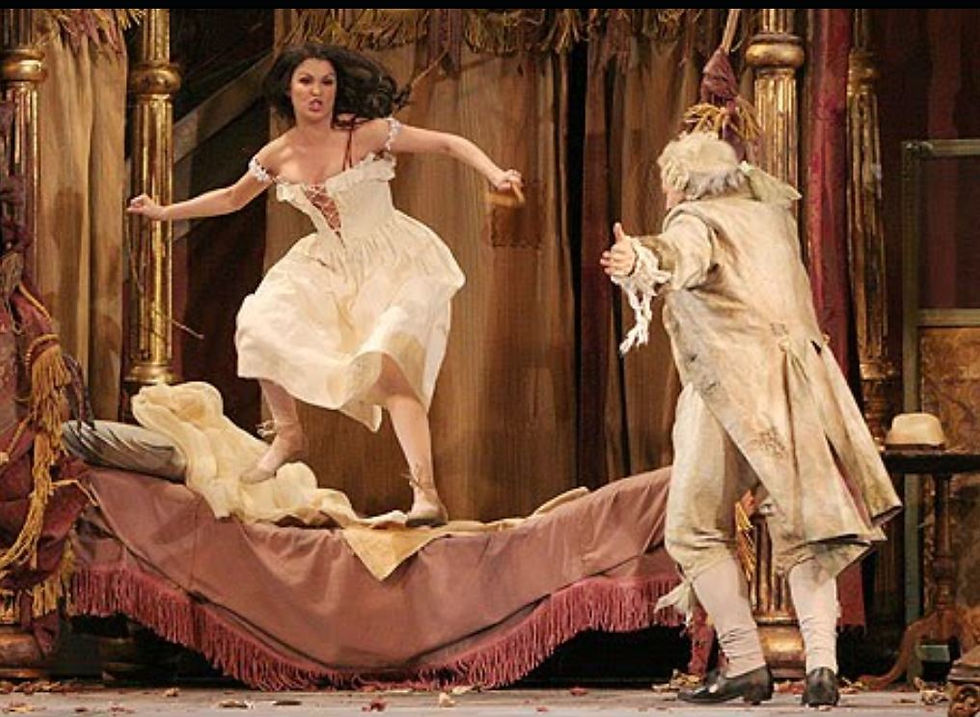
Tenor Matthew Polenzani is still Nemorino. (He had played the role in the 2012 season, with Anna Netrebko in this same production. Here they are (spoiler alert) in the final scene. ) One reviewer claimed, "Rarely do a tenor and soprano have such chemistry on stage and radiate a genuine joy in performing together as Polenzani and Yende did."
And listen to their final scene here.
Full opera on YouTube?

Yes indeed, and it's a very good one. Miah Persson - Adina with Rolando Villazón as director and also as Nemorino. It's at the Festspielhaus in Baden-Baden, set in the scenario of a Western Film Production. (Yes, another example of directorial fun with this opera.) There are English subtitles: find them in the controls.)
Lyn 21/7/26
Comments